
You Don't Need
$50K to Use AI
67% of SME owners believe AI is too expensive for their business. They're picturing the wrong thing entirely. Here's what AI actually costs for small and medium businesses in 2026, and why the real question isn't about budget at all.
Why 67% of SMEs Think AI Is Too Expensive
You're right to think AI sounds expensive. When you hear about AI in the news, it's always the headline-grabbing stuff: Google spending billions on AI research. IBM Watson powering enterprise solutions for Fortune 500 companies. Custom machine learning teams with six-figure data scientists.
That picture paints a very specific image. AI is for corporations with deep pockets, dedicated data science teams, and multi-year implementation budgets. If you're running a 10, 20, or 50-person company, where does that leave you?
According to a 2025 study on SME technology adoption, the number one barrier to AI adoption isn't technical complexity or lack of use cases. It's perceived cost. Two-thirds of business owners who haven't adopted AI cite affordability as their primary concern.
Here's the thing: they're thinking about the wrong kind of AI.
The Enterprise AI vs SME AI Distinction
When most people think "AI," they picture massive enterprise deployments. Custom-built machine learning models. Teams of data scientists. Multi-million dollar contracts with tech giants. And yes, that kind of AI exists. It's real, it's expensive, and it's completely irrelevant to your business.
Enterprise AI is built for companies with specific, complex problems that justify custom solutions. Banks building fraud detection systems. Airlines optimizing fleet logistics. Pharmaceutical companies analyzing clinical trial data. These projects require custom models, proprietary datasets, and armies of specialists.
SME AI looks nothing like this.
The AI revolution for small and medium businesses isn't about building custom systems. It's about using pre-built tools that solve common business problems. Customer service automation. Content generation. Sales follow-up. These aren't custom projects. They're subscription services.
Enterprise AI
IBM Watson
$500K+ per year
Custom ML Models
$1M+ development
Data Science Team
$800K+ per year
SME AI
Pre-built tools
Ready to deploy today
No data scientists
Your existing team can use it
Monthly subscriptions
Cancel anytime, no lock-in
What AI Actually Costs in 2026
Let's talk real numbers. The AI tools built for SMEs don't require million-dollar budgets or specialized technical staff. Here's what businesses your size are actually paying for AI capabilities that would have cost millions just five years ago:
Customer Service AI
- 24/7 automated responses across all channels
- Multi-language support without hiring
- WhatsApp, Email, and Web integration
- Intelligent handoff to human agents
Content Creation
- Blog posts and long-form articles
- Social media content at scale
- Email marketing campaigns
- Product descriptions and ad copy
Sales Automation
- Intelligent lead qualification
- Personalized follow-up sequences
- CRM integration and enrichment
- Meeting scheduling automation
The Bottom Line
Less than one employee. More output than three.
These tools cost a fraction of a single hire, yet can handle workloads that would require multiple full-time team members. A customer service AI doesn't take breaks, doesn't call in sick, and doesn't need training time for every new product update. The math speaks for itself.
Why Are These Tools So Affordable?
There's a reason SME-focused AI tools cost hundreds per month instead of hundreds of thousands. The technology itself has matured to the point where the underlying models can be used by multiple customers simultaneously. You're not paying for custom development. You're paying for access to powerful, pre-trained systems that have already been built.
Think of it like the difference between building your own car factory versus buying a car. Enterprise AI is the factory. SME AI is the car. You don't need to understand how the engine was designed to benefit from driving it.
This "commoditization" of AI capabilities is the single biggest shift in business technology in the past decade. What was once exclusive to companies with massive R&D budgets is now available to anyone with a subscription.
Let's Do the Math
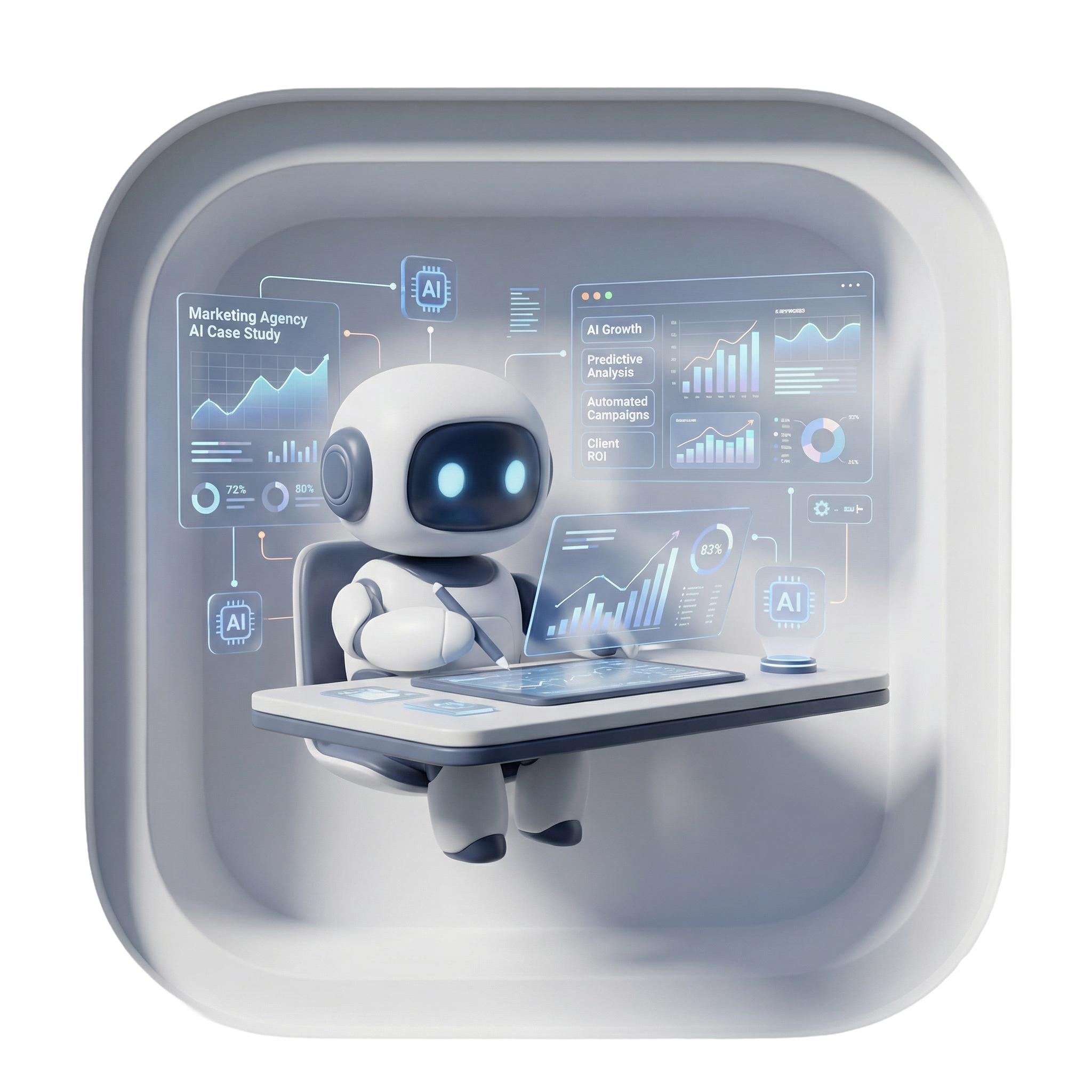
Numbers are one thing. Real results are another. Let's look at what actually happened when a 15-person marketing agency in Singapore tested AI content tools.
This agency was spending significant time on repetitive content tasks: first drafts of blog posts, social media captions, email newsletters, and client reports. Their writers were talented, but they were bogged down with volume instead of focusing on strategy and high-value creative work.
They added an AI content tool to their workflow. Monthly cost: $1,200. Here's what happened in the first month:
ROI Calculator
40% less time on content creation. That's not a theoretical projection. That's measured results from the first 30 days.
What did they do with that time? They took on two additional clients. They launched a new service offering. They finally had the bandwidth to focus on strategic work instead of churning out deliverables.
The AI didn't replace their writers. It amplified them. First drafts that used to take an hour now took 10 minutes. Research that used to require hours of reading now got summarized in seconds. The quality of the final output actually improved because writers could spend more time refining and less time generating.
What About Quality?
This is the question everyone asks. "Sure, AI is fast and cheap, but is it actually good?"
The honest answer: AI output requires human oversight. It's not about replacing human judgment. It's about accelerating human work. The agency didn't publish AI drafts directly. They used AI to generate starting points that their writers then refined, fact-checked, and polished.
Think of it like having a very fast, very knowledgeable assistant who works 24/7 and never gets tired. You still need to review their work. But you're reviewing and improving instead of starting from scratch.
The Question Isn't "Can I Afford AI?"
It's "Can I afford NOT to test it?"
Meanwhile
Your competitor already did.
The companies pulling ahead aren't the ones with the biggest budgets. They're the ones willing to test, learn, and adapt. AI adoption among Singapore SMEs doubled in the past year. The gap between adopters and non-adopters is widening.
This isn't about following trends or chasing shiny technology. It's about operational efficiency. It's about doing more with the resources you have. It's about competing with companies that have already figured this out.
The barrier isn't cost. It's outdated assumptions about what AI costs.
The Competitive Reality
Here's what's happening in the market right now: businesses that adopted AI tools in 2024 are now operating at a fundamentally different level of efficiency than their competitors.
A company with AI-powered customer service can respond to inquiries 24/7, in multiple languages, without scaling their support team. A company with AI content tools can publish twice as much content without hiring more writers. A company with AI sales automation can follow up with every lead, every time, without missing opportunities.
These aren't marginal improvements. They're structural advantages that compound over time. The longer you wait, the further behind you fall.
Risk vs. Regret
What's the actual risk of trying AI tools? Most offer free trials or money-back guarantees. The worst case scenario is you spend a few hours testing something that doesn't work for your specific situation. The best case? You discover a capability that transforms how your team operates.
Compare that to the risk of not trying. Competitors gaining advantages you don't have. Opportunities lost because your team is too busy with tasks that could be automated. Talent burning out on repetitive work instead of engaging with meaningful challenges.
The cost of inaction isn't visible on a balance sheet, but it compounds invisibly every month.
You Don't Need a Full Rollout
Forget the enterprise approach of 18-month implementation plans, steering committees, and pilot programs that take longer than actually using the technology.
Smart SMEs are testing AI with a different playbook. One workflow. Thirty days. Measurable results. Then decide.
Action Plan
Step 1
Start with ONE workflow
Step 2
Test for 30 days
Step 3
Measure the results
Choosing Your First Workflow
Pick the workflow that's eating the most of your team's time. The one where people spend hours on tasks that feel repetitive. The one that creates bottlenecks when volume increases.
Common starting points:
- Customer support queries: If you're answering the same questions over and over, AI can handle the repetitive ones while your team focuses on complex cases.
- Content first drafts: If your team spends hours generating initial versions that then need heavy editing anyway, AI can create starting points faster.
- Lead follow-up: If leads are falling through cracks because no one has time to follow up systematically, AI can ensure every lead gets attention.
- Meeting scheduling: If coordinating calendars across time zones is consuming hours, AI assistants can handle the back-and-forth.
The key is picking something specific and measurable. "Try AI" is not a goal. "Reduce response time for tier-1 support queries by 50%" is a goal.
The 30-Day Test
Thirty days is enough time to see real results without committing to a major initiative. During this period:
- Week 1: Set up the tool, train your team, establish baseline metrics
- Week 2-3: Use the tool in production, gather feedback, adjust settings
- Week 4: Measure results against baseline, calculate actual ROI, make decision
At the end of 30 days, you'll have concrete data instead of assumptions. You'll know exactly how much time was saved, how quality was affected, and whether the tool is worth continuing.
Where to Start
Most AI tools offer free trials or money-back guarantees. Your risk is essentially zero. The only question is whether you're willing to invest the time to test.
Pick one workflow. Give it 30 days. Let the results speak for themselves.
AI Isn't for "Big Companies"
The myth that AI is only for enterprises with massive budgets made sense five years ago. It doesn't anymore.
The tools exist. The price points are accessible. The results are measurable. The only thing standing between your business and AI-powered efficiency is the decision to test it.
AI is for companies ready to test. Nothing more, nothing less.
The question isn't whether you can afford $500-2,000 per month. The question is whether you can afford to let your competitors discover these tools before you do.
Ready to Transform Your Business?
Let's discuss how AI can solve your specific challenges.